
Which suits collectors: Nendoroid or Funko Pop for photo and value
Choose Nendoroid if you want detail, poseability, and interchangeable parts for photo shoots. Choose Funko Pop if you prioritize breadth, price, and the ability to quickly build a large collection. Nendoroids cost more per figure but offer better repairability and collectible value over time, while Funko Pops come in more licenses and are sold at almost every retail chain. The rest of this guide will go over exactly where the differences are most noticeable.
In short:
- Nendoroids are more poseable and have interchangeable parts, making them better for photography and scene building, while Funko Pops are static and easier to place.
- The pricing picture is clear: Funko Pops are cheaper per figure and easier to buy in stores, while Nendoroids cost more but have higher collector value and better durability.
- The material affects aesthetics and durability: ABS/PVC in Nendoroids provides sharper details and is more repairable, while vinyl in Funko Pops is softer but more susceptible to scratches.
- The choice between figure types should be based on collecting interest: Nendoroids are suitable for those who want depth and variety, Funko Pops for those who want to expand quickly at a low cost.
- Collector value, release channels, and licensing breadth differ and affect which figures you get your hands on and how much they can increase in value.
Table of contents
- Nendoroid or Funko Pop: quick comparison overview
- How do design and materials affect quality and aesthetics?
- Which figure is the most poseable and customizable?
- Which size and display solution is best?
- How much does it cost to start collecting, and where do you buy?
- How do the figures hold up over time, and how do you care for them?
- Which collector type suits Nendoroid, and which suits Funko Pop?
- Buying and care advice from Animefigurer.se
- What series and licenses are available for each brand?
- From Japan to global shelves: how did Nendoroid and Funko Pop come about?
- Selected Pop figures that show the breadth of the range
- My own position: why I still lean towards a mix
- Sources
Nendoroid or Funko Pop: quick comparison overview
The two types of figures solve different problems for a collector. Nendoroid is built for those who want to pose, photograph, and build scenes. Funko Pop is built for those who want to own characters from many series at an affordable price per piece.
The difference is most obvious when you place them side by side on the shelf:
- Material: Nendoroids are usually made of ABS and PVC, which gives them harder surfaces and sharper details. Funko Pops are made of vinyl, which gives them their characteristic soft, rounded shape.
- Poseability: Nendoroids have interchangeable facial expressions, hands, and sometimes entire limbs. Funko Pops are essentially static figurines with no moving joints.
- Price: Funko Pops generally cost less per piece and are more widespread in retail, making them cheaper to collect in large numbers.
- Availability: Funko Pops are available in supermarkets and toy stores worldwide. Nendoroids are more often sold via pre-order and niche retailers.
- Collector's value: Nendoroids are considered to retain their value due to the quality and complexity of their production. Some Funko Pop releases can increase in value due to exclusivity and rare “chase” variants.
The practical impact of these differences is immediately apparent when you're taking photos of your collection. A Nendoroid can be turned, bent, and posed to match a scene from the source material. A Funko Pop stands still, with its characteristic large head and fixed gaze, making it better as a visual marker on a shelf than as the main character in a photo booth.
Two quick scenarios make the choice easier:
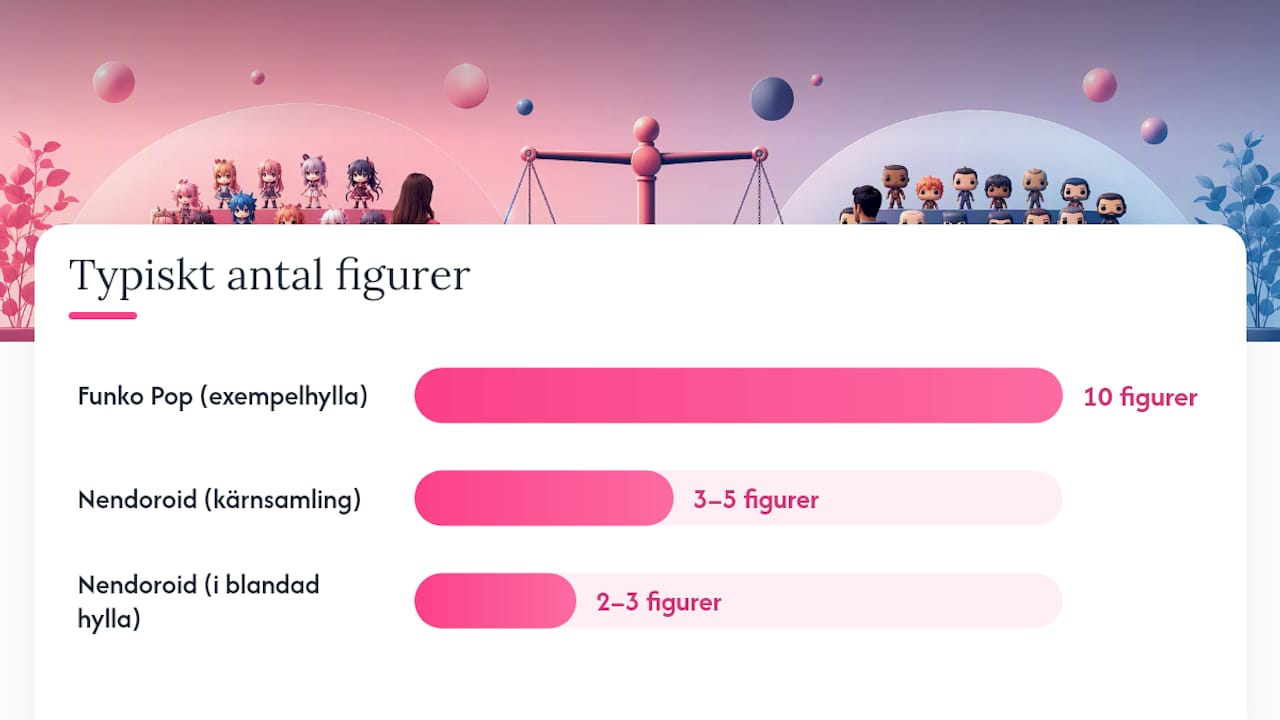
Choose Nendoroid if You already have a core collection of three to five characters you love, and you want to delve into their expressions, accessories, and alternative poses rather than broadening the number of series.
Choose Funko Pop if You collect thematically (all characters from a season, a universe or a genre) and want to see the entire collection grow quickly without your budget stopping after three purchases.
Most seasoned collectors actually end up with a mix. A shelf with ten Funko Pops covering an entire series, and two or three Nendoroids of favorite characters, provides both breadth and depth without the expense of a pure Nendoroid collection.
How do design and materials affect quality and aesthetics?
The finish is the first difference that catches the eye. Nendoroids are painted with multiple layers and thin brushstrokes for eyes, hair strands and clothing details, while Funko Pops keep a simpler, more graphic style with fewer color transitions.
It's no coincidence. The Nendoroid series is based on a fixed format logic with standardized height and reusable body templates, giving the manufacturer the flexibility to put production costs on facial expressions and accessories rather than on the mold itself. Funko Pops use the same basic mold (large head, small body) across thousands of licenses, which lowers production costs but also limits how much individual character each figure can have.
Pro tip: Hold the figure up to the light and look at the strands of hair. A Nendoroid often has three to four shades in the hair to create depth, while a Funko Pop is content with a single flat color.
The choice of materials has an impact on both feel and durability:
- ABS/PVC (Nendoroid): Harder surface, withstands handling better, easier to disassemble and reassemble if dropped.
- Vinyl (Funko Pop): Softer surface, more sensitive to scratches and marks, more difficult to retouch in case of damage.
Nendoroids' higher level of detail and interchangeable parts makes them generally more poseable and customizable than Funko Pops, but it's the choice of material that makes that level of detail possible in the first place. The hardness of the plastic allows for sharper molds and thinner details without the figure becoming brittle.
Official licensing also plays into expectations. Nendoroid buyers often expect figures that are nearly identical to the original anime or game design, down to the smallest folds in the fabric. Funko Pop buyers accept a more stylized interpretation, which leaves room for creative variations like “chase” figures in alternate colors.
Which figure is the most poseable and customizable?
The mobility is where Nendoroid wins hands down, and it's also where the difference between the figure types becomes most practical in everyday life. A Funko Pop is basically a statue. A Nendoroid is a small doll built to change.
Here's how to build a working pose setup:
- Change face part to match the mood of the scene, happy, angry or neutral, before placing the figure.
- Attach articulated arms and hands in a pose pointing towards the camera or a prop, rather than letting them hang straight down.
- Use the supplied tripod (stand) for jumping or floating poses, especially during action scenes.
- Combine accessories from multiple Nendoroid figures in the same series because the body templates often share scale and attachment points.
- Shoot in natural side light so that the details of the painting are visible in the image.
Funko Pops have their limitations here, but they're not without their advantages. A fixed pose means the figure never comes loose, falls apart, or loses a hand during transportation. This makes them better for shelves in children's rooms, office desks, or places where the figure is moved frequently.
Pro tip: Save the original packaging for your Nendoroids. Loose parts, extra faces, and accessories easily get lost in a box, and a lost hand lowers the resale value more than a scratch on the box.
If you want to further modify figures, many collectors buy separate base and stand sets that work across multiple Nendoroid lines. It's harder to do the same with a Funko Pop, since the whole point of the figure is that it's already finished in its final form.
Which size and display solution is best?
Size determines how much shelf space you need to plan for, and this is where the figure types differ noticeably. Nendoroids are typically around 10 centimeters, while standard Funko Pops are around 9 to 10 centimeters, but some special editions are significantly larger.
- A standard Funko Pop takes up about the same width as a coffee mug and is easily stacked tightly on a shelf.
- Jumbo and super sized variants of Funko Pop, which can reach 25 centimeters, require their own shelf space and work best as eye-catchers rather than in dense groupings.
- Nendoroids need more depth on the shelf than height, as stands and poses often protrude forward or to the side.
- In-box collectors (who keep the original packaging) save space by stacking boxes, while out-of-box collectors need displays or open shelves with lighting.
If you mix both types in the same display, group by series or theme rather than brand. A row of Funko Pops from the same anime next to a single detailed Nendoroid of the main character works visually better than mixing randomly.
For rotating display, store figurines you are not using in their original boxes, placed in a clean box out of direct sunlight. Sunlight will fade both vinyl and painted PVC over time, but vinyl's softer surface will take more visible damage more quickly.
How much does it cost to start collecting, and where do you buy?
The price difference is the single biggest factor for most collectors, and it often drives the entire decision. A new Nendoroid typically costs significantly more per figure than a standard Funko Pop, directly reflecting the production cost in detailed painting and articulated parts.
Funko Pops are generally cheaper to purchase and are sold in significantly more stores, making them the natural choice if you want to build a collection of ten, twenty, or fifty figures without breaking the bank. Nendoroids are more often sold through pre-order models and specialty retailers, meaning you often have to order in advance and wait weeks or months for delivery.
There are three factors that determine how much an individual figure costs and how difficult it is to obtain:
- Exclusivity: Figures tied to a single store or fair (exclusive) become harder to find and more expensive afterwards.
- Chase variants: a rare color variant hidden among regular Funko Pop boxes can fetch many times the price on the secondary market.
- Series production: Nendoroids are often printed in limited runs with the possibility of a later “reissue”, which makes timing important.
Collector discussions point to Nendoroids being less common than Funko Pops on regular store shelves, which explains why they are more often purchased online and via pre-order rather than as impulse purchases at the checkout. This makes online stores with clear stock status and pre-order management extra important for those who want to be sure to get their figure on time.
Statistical note: The difference in distribution isn't just a sentiment among collectors. Nendoroids are structurally sold through niche channels, while Funko Pop bases its entire business model on mass distribution in supermarkets, which explains why you'll find a Pop in a regular toy store but rarely a Nendoroid.
If you want to maximize collector value rather than just owning lots of figures, it pays to view Nendoroids as a long-term quality investment, while Funko Pop value is more often driven by rarity and the timing of the purchase rather than the quality itself.
How do the figures hold up over time, and how do you care for them?
The difference in material that determines the level of detail also determines how the figures age. It is the same property, the hardness of the plastic, that makes a Nendoroid more durable but also more difficult to permanently damage.
Common injuries clearly differ between the two:
- Nendoroid: loose joints that become loose after a lot of use, lost or broken small parts (fingers, hair tips), paint wear due to heavy friction against the stand.
- Funko Pop: scratches and marks in the vinyl surface, pressure marks from tight storage, paint bleed where two colors meet at the factory.
The ABS and PVC construction of a Nendoroid makes it more repairable than a vinyl figure. You can often take it apart, clean it, and put it back together after a drop, while a scratch on a Funko Pop's vinyl surface is practically permanent without professional touch-up.
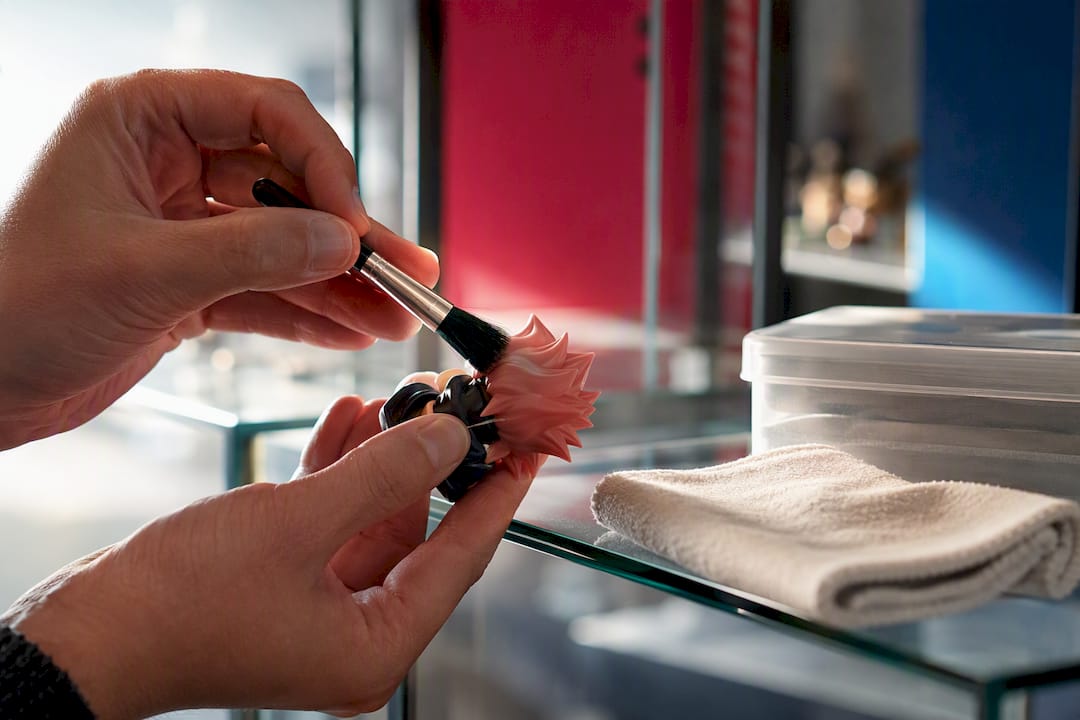
Cleaning should always be dry or almost dry. A soft brush or lint-free cloth will remove dust without risking moving the paint. Avoid alcohol-based cleaners on both types of figures, they will dissolve the paint faster than you think.
Pro tip: Store figurines you display behind glass or in a dust-free display case if you live near a busy street. Dust mixed with humidity forms a thin film that is difficult to remove without scratching the surface.
Professional repair is usually only worthwhile for Nendoroids with high collector value, as the parts can actually be replaced or glued invisibly. For a damaged Funko Pop, it is often cheaper to buy a new figure than to pay for retouching.
Which collector type suits Nendoroid, and which suits Funko Pop?
Most collectors identify with one of four profiles, and the right choice depends more on how you actually use the figures than on which brand is “best.”.
- The photographer: Want to create scenes, dioramas and action figures for social media? Nendoroid is the obvious choice thanks to its poseability and interchangeable facial expressions.
- The display conservator: want a clean, organized shelf with figures that never need adjusting. Funko Pop is a better fit here, as the figures stand stable and require no maintenance of joints or poses.
- The budget collector: want to own as many characters as possible without spending a lot per piece. Funko Pop clearly wins on price and availability in regular stores.
- The investor: looking for figures that can increase in value. Here the strategy is divided, chase-Pops for quick rarity, Nendoroids for long-term quality that holds value even without hype.
Building a mixed collection without aesthetic conflict is mostly about grouping. Keep Funko Pops in thematic rows (a whole series, a whole universe) and let Nendoroids stand as individual eye-catchers with their own lighting or background. Don't mix scales on the same shelf; a Nendoroid next to a jumbo Funko Pop looks unbalanced no matter how great each figure is on its own.
Buying and care advice from Animefigurer.se
Animefigurer.se has built its range around detailed, officially licensed figures from series such as Naruto, One Piece, Demon Slayer and Jujutsu Kaisen, with product lines ranging from Nendoroid and Pop Up Parade to SHFiguarts and Funko Pop. This breadth makes it possible to compare materials and scale directly in the same store before you decide.
Practical buying advice is mostly about timing and filtering:
- Sort by series or character to find the right Nendoroid variant among multiple releases of the same figure.
- Check pre-order dates carefully, Nendoroids often sell out before the release date.
- Look for blind box and exclusive editions separately if you're collecting for rarity rather than for a specific character.
- Read the product description for material specification (ABS/PVC or vinyl) before purchasing, this determines how you should store the figure.
Protective accessories significantly reduce the risk of shipping and long-term display. A dust-free stand, a stable base and the original box (saved, not thrown away) protect the value no matter which figure type you buy. Fast delivery and secure payment means you can plan pre-orders for multiple series at the same time without worrying about missing the release window, a recurring theme in company background.
What series and licenses are available for each brand?
The breadth of licensing is where Funko Pop has a structural advantage. A very large number of Funko Pop variants cover everything from anime and film to games, music and sports, making the brand the first choice if you collect outside of a single genre.
Nendoroids tend to focus more on anime, Japanese games, and certain Western game and film licenses with strong fan bases in Japan. The range is narrower but deeper, with a popular character often getting multiple Nendoroid versions (school uniform, battle gear, seasonal variant) rather than branching out into new franchises.
For a collector with a broad taste (ranging from anime to American comics and video games), Funko Pop covers more interests in a single collection. For a collector focused on a specific anime or game, Nendoroid often provides more options within that world. Many collectors solve this by letting Funko Pop represent the “breadth” of the collection and Nendoroid represent the “depth” of the series they are really passionate about.
From Japan to global shelves: how did Nendoroid and Funko Pop come about?
Launched by the Japanese company Good Smile Company, Nendoroid built on a long tradition of poseable action figures in the Japanese figure industry, but with a focus on a smaller, more affordable and accessible scale than traditional scale figures. The format logic of fixed height and reusable body templates made it possible to scale up production without losing the level of detail.
Funko Pop grew out of an American bobblehead concept and evolved into today's stylized vinyl figure with the recognizable large head. Through licensing agreements with virtually every major entertainment company, from film studios to game developers, Funko built a production model that prioritizes volume and breadth over detail.
The two brands therefore represent different philosophies rather than just different price tags. Nendoroid was developed within a collector's culture that already valued poseability and precision. Funko Pop was developed within a pop-cultural mass consumption where recognizability and accessibility trumped detail. That difference in origins still explains why they feel so different in the hand today.
Selected Pop figures that show the breadth of the range
If you want to see exactly what a Funko Pop collection can encompass without spending a fortune, three products in Animefigurer.se's range are good examples of the range within the brand.
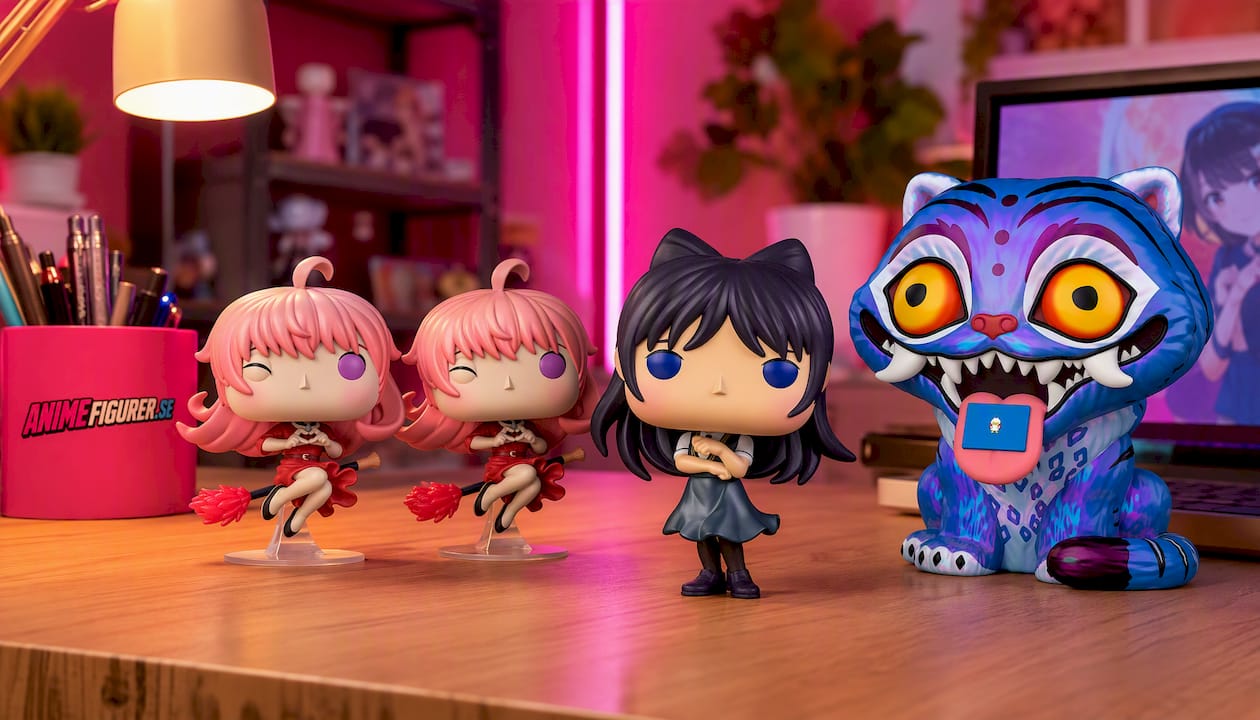
Witch Watch POP! Animation Vinyl Figures Nico w/Chase 9 cm Assortment (6) shows exactly how the chase model works in practice, a six-pack where a hidden rare variant of Nico can appear among the regular figures. It's a clear example of how Funko Pop creates collector excitement without raising the price of each individual figure.
Witch Watch POP! Animation Vinyl Figure Nemu 9 cm represents the standard format, a single character in the same series, perfect for those who already own Nico and want to complement their shelf thematically without buying a whole assortment again.
KPop Demon Hunters Super Sized Jumbo POP! Vinyl Figure Derpy 25 cm shows the other extreme, a jumbo figure of 25 centimeters that acts as a central focal point on the shelf rather than one of many in a row.
A Pop is often the smarter buy when you're building a thematic shelf around an entire series, want to try out a new license without a big investment, or simply want the eye-catching appeal of a jumbo figure without paying Nendoroid prices for the size. If you want to expand your collection further or find more cartoon figures in the same format, the store's full range and current sale offers the right starting point.
My own position: why I still lean towards a mix
If I had to choose a single category, I'd go with Nendoroid, because the poseability and level of detail give me something Funko Pop never can, a figure that tells a little story every time I change the pose or face. But that's an honest choice only for someone who already knows which five or ten characters they really care about.
For most new collectors, I think the case for Funko Pop is stronger than it seems at first glance. The price allows you to test your taste, fail cheaply, and learn what you actually like before investing in a more expensive Nendoroid of the same character. The photographer should start with Nendoroid right away. The budget collector should start with Pop and let the collection grow organically towards Nendoroid as a couple of characters prove to be enduring favorites over time.
The most honest recommendation is to not see it as a choice between brands, but as two tools for different jobs on the same shelf.
— Theo